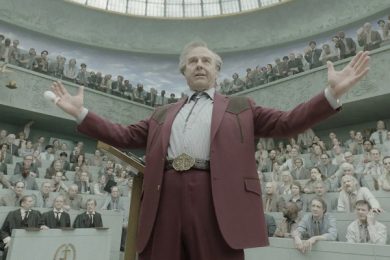
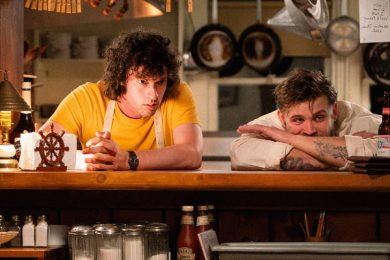

Josh O’Connor is a hard-working man. He gained attention in the 2017 indie film God’s Own Country before gaining mainstream awareness in his Emmy-winning turn as Prince Charles on Netflix’s The Crown. Since then, he’s become an electrifying screen presence in movies as varied as Alice Rohrwacher’s La chimera and Luca Guadanino’s Challengers. Those two films – and those two performances – are about as different as two films can get, but his brilliance in both established him as an actor with incredible range. He got his first chance at headlining a Hollywood film this year with Rion Johnson’s Wake Up Dead Man, and he once again proved his adaptability and surprisingly broad appeal. But that movie was marketed as an ensemble, even if the film is mostly about him. His other 2025 film, The Mastermind, is less ambiguous about his center placement (he’s the only person on the poster). It’s another remarkable performance on par with La chimera and Challengers, and another shambling character to add to his already impressive resume.
The Mastermind is written and directed by Kelly Reichardt, one of the great filmmakers of contemporary American independent film. Her scripts, often associated with the intentionally-paced exercises of Slow Cinema, frequently follow characters pulling through the morass of America’s obsessions with individualism. They frequently meet the boot of this country’s crippling dependence on capitalist structures, and they often play a part in their own downfall. The stakes vary. The settlers of Meek’s Cutoff and the enterprising businessmen of First Cow are fighting for livelihood and basic survival. While the protagonists of Certain Women and Showing Up are facing more philosophical struggles. Reichardt’s talent is for making all these stories compelling in equal measure, whether set some time in the dangerous American past or the ominous American present.
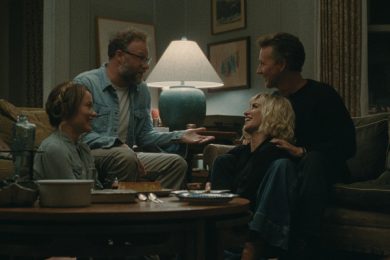
O’Connor proves to be a perfect Reichardt protagonist. For a filmmaker known for her pensive works with women, O’Connor proves deft at existing within Reichardt’s sparse but sensitive settings. The young actor plays James “JB” Mooney, an aimless husband and father with a compulsion for living outside of the bounds of society. He lives in the sleepy suburbs outside of Boston. His wife, Terri (Alana Haim), seems to understand her husband, even if his lifestyle (and lack of income) has become quite taxing. He gets by mostly from borrowing money from his mother, Sarah (Hope Davis), and leaning on the political influence of his father, William (Bill Camp), a local judge. All the adults in his life are losing patience with his seeming lack of purpose, while his two young sons (played by real-life brothers Sterling and Jasper Thompson), watch curiously.
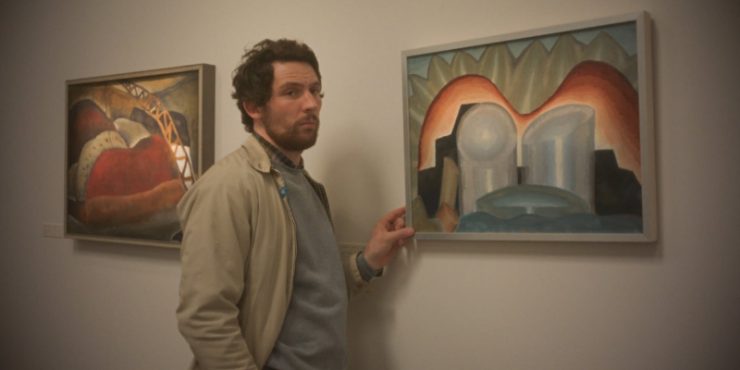
JB’s latest scheme is robbing the local art museum of several paintings by artist Arthur Dove. He reaches out to Guy (Eli Gelb) and Larry (Cole Doman), whom he convinces to pull off the heist. JB is the planner, but knows enough to find others to do the dirty work. As the time creeps closer, Larry pulls out of the plot, leaving JB to replace him with Ronnie (Javion Allen), a young wild card who plays fast and loose with the parameters JB has placed. During the heist, Ronnie pulls out a gun, which not only terrifies innocent bystanders, but shocks JB and Guy, who specifically expressed that no weapons be used. Ronnie’s action brings a more outsized media attention to the crime, which brings more heat onto JB than he initially expected. JB’s shrewdness gets him out of a few pickles, and his ability to wield his father’s local authority allows him to keep the police at arm’s length, at least for a little while. But despite his best efforts, the walls begin to close in on JB, and he begins to see the few remnants of civilized life that he possessed begin to fall away.
O’Connor’s JB is fated like a Coen Brothers character. He underestimates the powers of the universe to knock him down, and his blindness to that is the biggest contributor to his downfall. Reichardt details the precision of his heist with such ornate attention, that you almost miss the glaring ineptitude behind the execution. If the first half feels like the Coens, Reichardt snatches pure authorial vision in the second half as JB is forced to wander, his new status as wanted criminal alienating all family and friends. This desolation is what Reichardt does best, and there’s no other filmmaker who better captures the inherent isolation that comes with existing within American culture. JB is the mastermind behind the museum theft, but he’s also the mastermind behind his own demise. Reichardt excels at finding the humanity within these anti-heroes, and JB is one of her best creations yet.
Watching O’Connor in this and in Wake Up Dead Man in a single weekend will really showcase the versatility in his skill set. If his Knives Out performance proves he can carry a mainstream comedy thriller, The Mastermind only cements his reputation as a go-to leading man for offbeat independent films. JB has the sleepy intensity of his La chimera performance, as well as the bad boy charm of his star-making performance in Challengers, which is to say that this feels like the performance that everything was leading to. He’s a perfect fit for Reichardt, effortlessly weaving in the moments of humor into the director’s sustained tension. As JB’s situation becomes more dire, the Bressonian turn in circumstance is played wonderfully, and in the film’s masterful conclusion, Reichardt and O’Connor perfectly execute the pointless cruelty of the world JB inhabits.
Reichardt is a filmmaker who has only gotten better as the themes and resources behind her stories have expanded. Anyone who can make the fated tale within First Cow and follow that with the artistic frustrations of Showing Up must be thought of as a master in some way or another. The modest presentation belies some incredibly complex filmmaking. The precision of her shot framing and the expert nature of her editing (of which she does herself here) has led to a tone that is entirely unique to her. I’d describe it as melancholy but also remarkably funny. She spares no punches in showing us the savagery of this world, but always avoids becoming morose. The Mastermind feels like her most direct attack on the failure of the American experiment, a take down of the state-sponsored apparatus which ruthlessly beats down the individual while esteeming the powerful criminals who devalue everyday life for everyone else. The movie’s final shot leaves no question about its loyalties, and the casualness of its presentation only reinforces that Reichardt is an artist at the peak of her powers.
Written and Directed by Kelly Reichardt