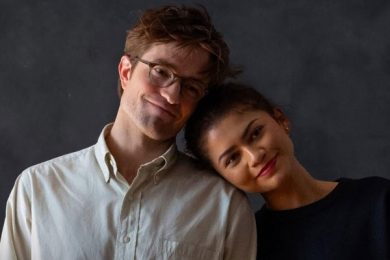
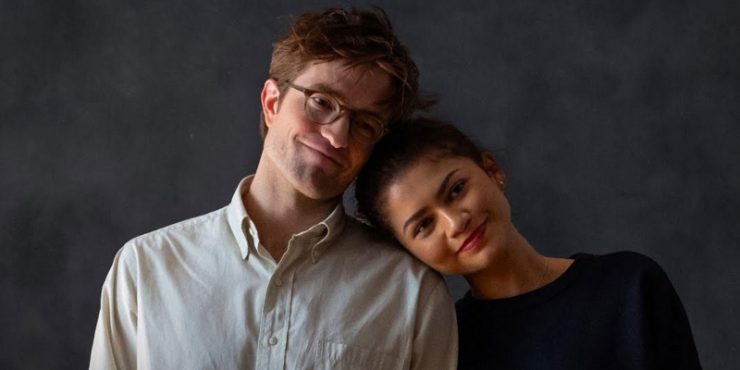
Upon its theatrical release in April, few people knew the basic plot of The Drama, just that it presented itself as an offbeat romantic comedy, starring two beautiful movie stars on the verge of getting married. Something feels quite off with the film’s main couple, who are played by Zendaya and Robert Pattinson, and learning what that is was the bait for audiences. Zendaya and Pattinson are two incredibly famous and remarkably beautiful people, and it was encouraging that The Drama was an unqualified financial success. It meant that there was still an audience for films about adult relationships, and that there was still some sustaining viability to the movie star model. But more important than its financial victory, was its cultural one. This is a movie that inspires conversation; conversation between friends and family, but more provocatively, between significant others. At its core, this is a movie about the high cost that comes with fully knowing anybody, and the collateral damage that comes with actual vulnerability between partners.
The Drama is perhaps the best argument for movies stars that I have seen in quite a while. It’s easy to over-romanticize the era of star vehicles in movies, especially as they’ve been supplanted by pop culture franchises and various other IP. A24 sold this film on a secret, yes, but it also sold us on the promise of a movie featuring Zendaya and Pattinson, each equipped with their own fervent fan base. Pattinson’s ability to open a film that isn’t The Batman is spotty, but he is incredibly famous. It’s Zendaya who possesses the power to put butts in seats by simply showing up. And thank god director Kristoffer Borgli allows them to explore their characters in ways both satisfying and unexpected. The premise of The Drama is not one that guarantees interest in 2026 – and the degree to which it’s successful in what it’s trying to do can be debated – but what we do get is two beautiful stars testing the waters in a comedy that writhes in discomfort.
Pattinson plays Charlie, a British art curator working at an art museum in Cambridge, Massachusetts. Zendaya plays Emma, a book lover who works within publishing. Their meet cute at a coffee shop is awkward. Charlie sees her reading a book and makes up a lie about loving the book himself, only to get totally ignored. In an attempt to save face, Charlie approaches her again and learns that Emma is actually deaf in her right ear and, listening to music in the left ear, never even heard his initial advance. “Want to start over?” she asks him, a motif (and a sentiment) that will repeat itself several times before the movie ends. That their entire relationship begins on an untruth from Charlie is an important point. Later in the film, Emma will be vulnerable with a truth about her past, with a confession that completely restructures their relationship.
Borgli, a Norwegian director, has already distinguished himself as a premise-forward storyteller with a flair for the provocative. That certainly fits the bill with The Drama which fashions a lot of romantic comedy tropes within some very taboo subject matter. Released by A24, the indie-turned-mainstream distributor flexed its marketing muscles here, hiding said taboos in a bid to tempt curious audiences to the theater. The Drama’s box office success speaks to the viability of their thinking. The film’s trailer showed us Pattinson and Zendaya straining through some unknown relationship discomfort and promised us a glimpse into the darker aspects of their romance.
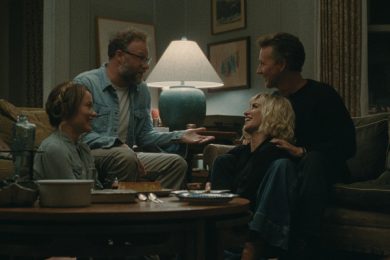
The film’s “twist” (as it was marketed) happens within the first thirty minutes. Charlie and Emma are having a drunken dinner with their best man, Mike (Mamoudou Athie), and maid of honor, Rachel (Alana Haim), themselves a married couple. The conversation winds toward each person confessing the “worst thing” they’ve ever done. It’s here where I should mention **SPOILER ALERT**. As each person playfully tells stories of youthful indiscretion and childhood cruelty, Emma finally steps up and states with trepidation that she planned to commit a school shooting when she was in high school and went as far as bringing a gun to school. First met with quiet shock, Rachel quickly becomes angry. Her cousin is paralyzed due to a mass shooting, she says, and it becomes clear that Emma’s “worst thing” is anecdotally unacceptable. In disbelief, Charlie tries to stand up for Emma – after all, she didn’t actually do it – but he’s obviously shaken, and before the end of the meal, Emma vomits in front of everyone.
The Drama’s screenplay, written by Borgli, succeeds in sparking the kind of theoretical conversations a storyteller dreams of. The problem is that the movie, by necessity, needs to have that same conversation with itself, and that is where this kind of provocateur cinema either sinks or swims. Following in the footsteps of his fellow Scandinavians Lars von Trier and Ruben Östlund, Borgli is taking a dig at the more superficial (read: American) aspects of our larger society. Where Von Trier’s focus is often emotional, and Östlund’s is often economic, Borgli is taking a more abstract view. His previous films, Sick of Myself and Dream Scenario, are obsessed with commodification culture and the fickleness of human connection. The Drama has more of that, though Emma’s vantage point becomes progressively limited after her confession is made. The focus here is instead on Charlie, and how he struggles to comprehend the idealized image of his fiancé against this new information. With only one week left until their wedding, there is suddenly some wariness toward the commitment.
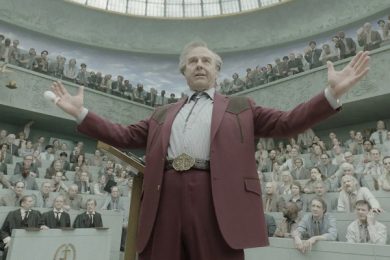
It’s hard to measure the success of The Drama – both financially and cinematically – against Borgli’s competency as a filmmaker. Borgli shares editing credit with Joshua Raymond Lee, and they chop up of the film to create humor and disorientation. It’s not always apparent if you’re watching something real or a fever dream of paranoia. Borgli’s style is often two things at once: inventive and didactic, bravura and ostentatious. There’s obvious talent, but his preoccupations with societal hypocrisy always take center stage. His ability to consistently keep the audience off balance without becoming off-putting proves that he has a strong control on his messaging, and that he seems quite capable of getting spirited performances from big name stars means that he won’t have to beg talented performers to work with him in the future. But for all the satire, there’s not much of a point here, and it’s observations on gun culture feel almost glib.
But this is where I get back to Zendaya and Pattinson, who are both fantastic in the film. The Drama reminds you that great chemistry and incredible screen presence is often more potent then thematic coherency. Pattinson has spent most of his post-Twilight years polishing his sleazeball bonifides (see his performance in this year’s The Odyssey for further proof), and The Drama allows him to add a Hugh Grant-like affability to the mix. Zendaya, despite the titanic nature of her fame, still feels like an actor who has to prove herself. One can quibble with how The Drama treats her character, but this is the best film performance I’ve ever seen from her. Emma is a woman of obvious beauty but who comes from a childhood of isolation and misguided apathy. Zendaya’s portrayal of an adult woman still struggling to navigate the social dynamics of her peers is surprisingly authentic (and special shout out to Jordyn Curet who has a hilarious performance in flashbacks as the teenaged Emma). Zendaya choosing to do this role (and to a lesser degree, her 2023 role in Challengers) proves that she’s eager to shed her child star moniker and be in interesting projects that stretch our perception of her. The Drama proves that that’s possible.
.
Directed by Kristoffer Borgli