


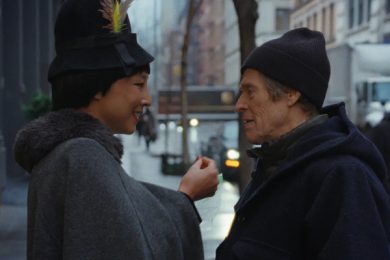
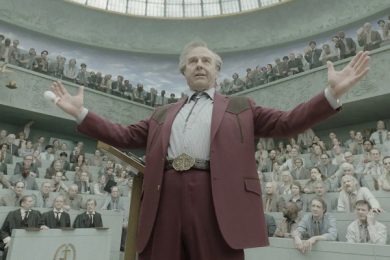
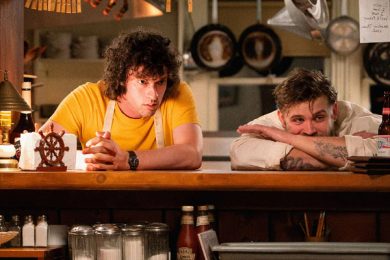
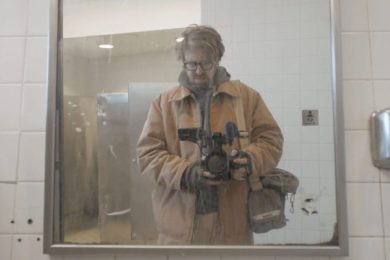
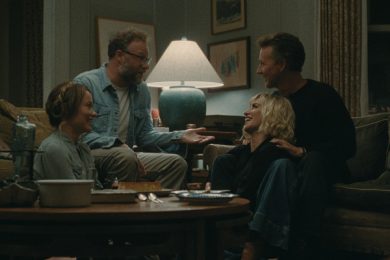
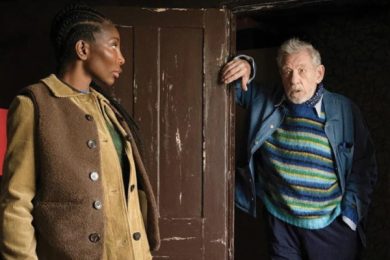
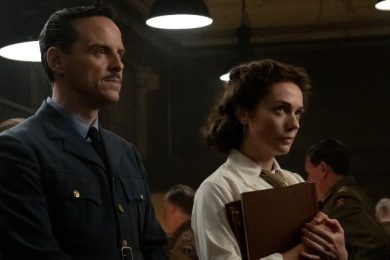
You Can See Everything is the first Lance Oppenheim film that I’ve seen. Earlier this year, his first narrative feature, Primetime, was released starring Robert Pattinson as To Catch a Predator’s Chris Hanson, but before Primetime, Oppenheim was known as a crafter of ornate documentaries covering eccentric topics such as a massive Florida retirement community in Some Kind of Heaven or unregulated sperm donation in Spermworld. I wouldn’t say that I had an aversion to Oppenheim (again, I hadn’t seen his films), but it was apparent that he was at the vanguard of a particular kind of documentary that has risen in popularity this decade: the Portrait Mode doc. The aesthetic is lush, stylized, and calls attention to itself. It’s the opposite of cinema-verité, and goes against what you expect a documentary to look like. It’s a style that has found itself in other, non-Oppenheim films like 2020’s The Truffle Hunters and The Mole Agent.
I’ve been a bit skeptical of this new style of documentary. The heightened formalism seems to contradict the truth of what you’re meant to be watching. The compositions, so meticulously staged, create a paradox: is this really trying to capture an objective reality? Then you get to You Can See Everything, a movie that has become a (very unexpected) box office hit, in part because Oppenheim’s cinematic flourish intentionally blurs these exact lines. All documentaries, even the verité ones, are handled and crafted, Oppenheim’s film just makes it look like it’s been handled and crafted. And as You Can See Everything unfolds, Oppenheim and his co-director, Nathan Fielder, begin to interrogate the very concept of objective reality. Fielder, a comedian who has emerged in recent years as a shockingly profound observer of the human condition, combines his curiosity with Oppenheim’s grandeur and aims it at one of the most mercurial American figures of the Twenty-First Century: Elizabeth Holmes.
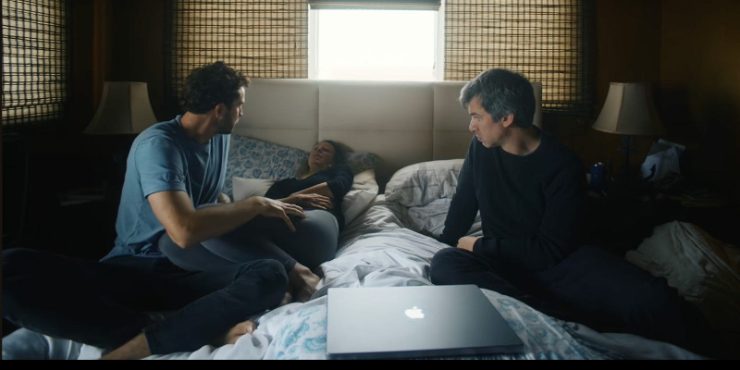
Holmes has been a subject of fascination for many since her inglorious fall as the CEO of Theranos, a company that promised to revolutionize the medical industry only to be revealed as a sham. Holmes was convicted for defrauding investors and sent to prison in 2023. As the film explains, Holmes’s partner, Billy Evans, thought a film documenting her day-to-day life would help to repair her damaged public image, and perhaps spur investigations into those institutions that have exposed Holmes’s crimes. Approaching prestige indie studio A24, filmmaker Oppenheim and television personality Fielder appear on the scene. The degree to which Holmes and Evans are familiar with either of the men is never confirmed, though likely they don’t know them at all. Despite this, Fielder, Oppenheim, and crew are given “unlimited” access to Holmes, Evans, their two young children, and a luxury San Diego rental on the Del Mar beach. Fielder spends most of his time in front of the camera, interviewing his subjects in his standard deadpan manner. Oppenheim goes unseen (mostly), seemingly orchestrating the film’s slick look.
At its most simplified, Fielder’s most popular shows, Nathan For You and The Rehearsal, found comedy and tragedy in the behaviors of “regular” people, showcasing the ways a camera can instigate performance, either consciously or not. Holmes and Evans fit perfectly into this dynamic. They’re eager to portray themselves, and that eagerness plays right into Fielder and Oppenheim’s hands. The degree to which the couple understands their complicity in this portrayal is the crux of the whole thing. With You Can See Everything, Fielder is finally punching up, taking on a subject with actual cultural recognition. In ingratiating himself in their home, Fielder immediately faces a press by Holmes and Evans professing her absolute innocence. Holmes, herself, takes it further: she claims that she’s never even knowingly lied in her adult life, a claim that Fielder refuses to believe.
Holmes wants to be seen as an innocent woman, undone by a naivete that goes part and parcel with her theoretical genius. She has a mind for technology and progress, but not for human emotion; she could envision captivating the world, but not that the world would conspire to take her down. Nobody outright calls her autistic but this is the implication. Evans’s role is harder to read. He’s cagier, more sinister. At times he plays Holmes’s fierce protector, and at other times feels like her maniacal captor. He seems very willing to be villainous, and he has that luxury. He doesn’t feel any burden to wash his reputation, but he’s completely committed to washing hers. Fielder has puppeteer-ed so many moments where people, for better and more often for worse, accidentally reveal who they are, but these two feel completely impenetrable to him. In a pivotal scene, Evans tells Fielder “I know what you’re thinking” to which Fielder replies with uncharacteristic frankness, “No you don’t”.
This moment more than any explains what film you’re watching. A more seasoned documentarian (say, Erroll Morris) may have asked Evans what it was that he thought he was thinking. Fielder instead shows his frustration, and in doing so, puts himself on his back foot when confronting this strange, ever-unknowable couple. This is not the true crime mea culpa that Evans or Holmes – or, probably, A24 – is expecting, but a working thesis on filmmaking itself. The film’s first hour is composed of the six weeks Fielder and crew spends with them before Holmes reports to federal prison in Texas. After that, Fielder attempts to decipher and reconstruct what they captured. If you’ve seen The Rehearsal, you won’t be surprised to see his tactics, which send You Can See Everything further into its meta-nonfictional spiral. With Holmes in prison, only Evans is available for conversation, and he has become even more controlling in her absence. This includes making unilateral decisions on her behalf. With each step, Evans’s behavior becomes more and more unseemly, and Holmes looks more and more sympathetic. But something inside Fielder doesn’t trust this instinct.
How You Can See Everything fits into the larger Nathan Fielder Project is one of the movie’s sub-themes, though this is probably the first thing he’s ever made that isn’t outright for comedic purposes. One figures that Oppenheim keeps the discipline in this regard. All of Fielder’s shows end up being mainly about his own preoccupations with life, and this movie is no different. Fielder is playing a character as well, but he is often doing so knowingly. This movie is his attempt, at least in the reality of the film, to be an objective observer. When his subjects become uncommunicative, he’s left to handle the material in the only way he knows how, but the process suddenly feels ill-fitting. He tries in earnest to remember verbatim unrecorded encounters he had with Holmes and Evans, and attempts to dissect what they could mean. Were they more genuine before they were being recorded? Or is their whole existence an elaborate construction? If it is, why continue it once Holmes is actively incarcerated?
Fielder is trying to unchew all this bubble gum, and in Oppenheim’s construction of events, the audience will be compelled to do this as well. Part of the reason the film is such a shocking hit is the conversation that people want to be a part of. So here’s where I will talk about the movie’s greatest wild card and throw a **SPOILER** warning, though I can’t imagine anyone reading this hasn’t already seen it. Fielder and Oppenheim call upon the actress Amanda Seyfried – who famously won an Emmy for playing Elizabeth Holmes in the miniseries The Dropout – to help assist in recreations, but also (and often) as a consultant on their project, hoping her own insight into Holmes might provide context. Seyfried doesn’t arrive until about halfway through the film, but becomes a pretty important piece, and proves to be a much more willing participant in Fiedler’s process than you would imagine. In an absolutely thrilling sequence, Seyfried sits with Evans and Fielder for dinner and tense conversation. It’s at this point that you as an audience member might be questioning the authenticity of what you’re seeing.
Seyfried is a spoiler that feels impossible not to mention when discussing the film. But You Can See Everything still has a bounty of surprises both before and after her arrival that are impossible to describe, let alone discuss, outside of the context of watching the movie. It’s difficult to write about a movie like this because, simply, I have never before seen a movie like this. There is Abbas Kiarostami’s Close-Up, perhaps the greatest movie ever made about the inherent artifice of the movie camera, but that movie was more up front about what is real and what isn’t. Questions of objectivity in documentary are as old as film theory itself, but You Can See Everything interrogates this with a specifically 2026 lens: we are in an age where we are all living in our own reality distortion field – sometimes it feels like the only mode of self-care available to us. Holmes and Evans have built a narrative so actively hostile to fact, but in front of the camera they sell that they believe it. And if they believe it fully, is it really a lie after all?
We’ve all given in to our surveillance state and we’ve decided to craft it to our own liking, and with specialization of social media, we all experience the world in the way that we choose to. The clarity with which You Can See Everything shows this is a big part of its success, though I think for most audiences it really just scratches the itch of watching incredibly eccentric rich people fall apart. Is You Can See Everything the best film of the year? The question is valid but seems besides the point, as the entire movie deconstructs that line of thinking. What we do know is that the movie is a hit, and that’s a fact that no reality distortion can deny. And it may change the course of documentary filmmaking going forward, as it becomes more and more impossible to even feign such a thing as objectivity. As for Fielder, he has once again re-shaped our expectations of him as an artist and performer, while giving us yet another story that scares us because it is so innately human.
.
Directed by Nathan Fielder and Lance Oppenheim